
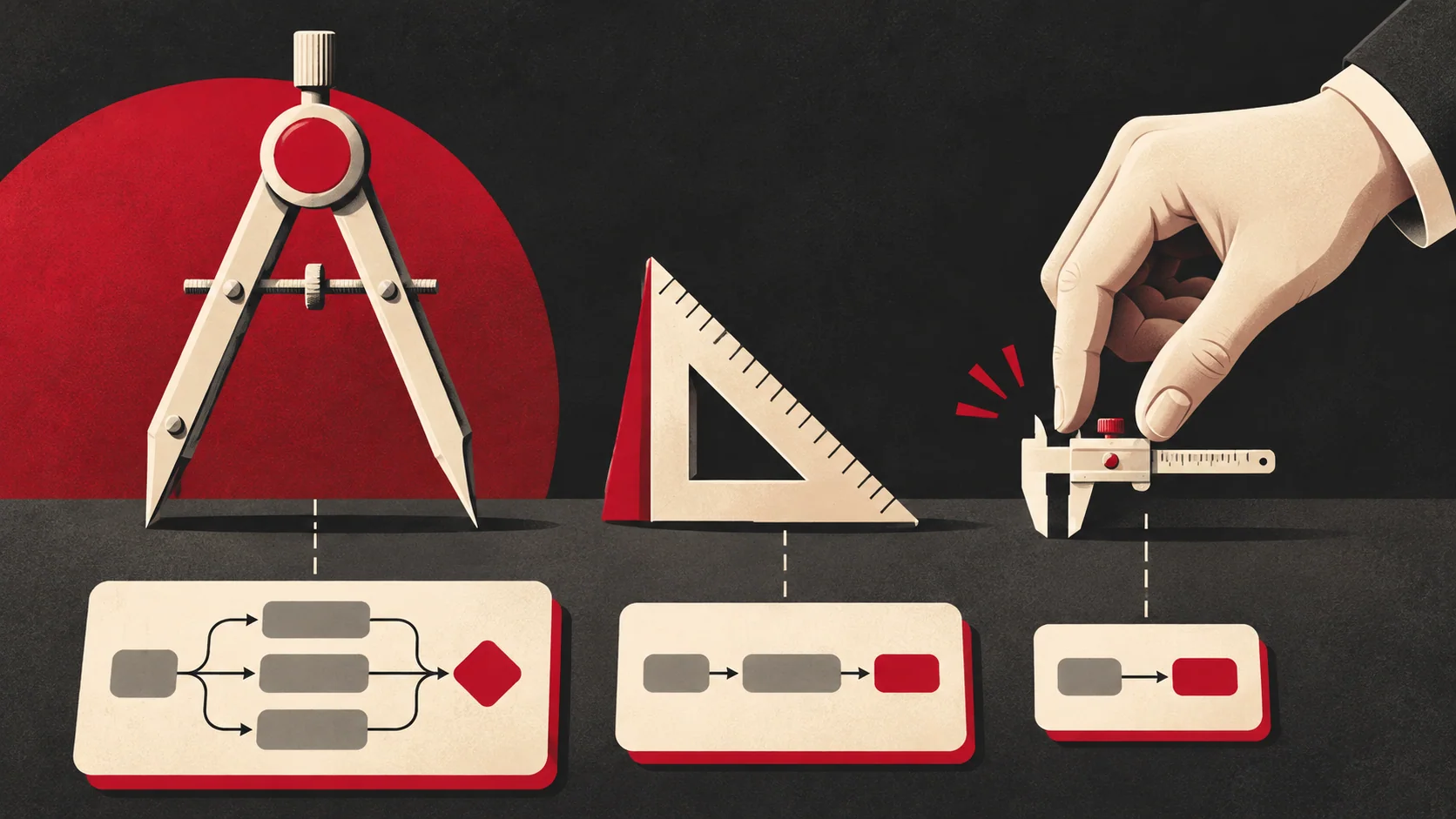
A bigger model is not automatically a better purchase
When a new AI model arrives with impressive demonstrations, it is easy to assume your business should use it. If it can tackle difficult scientific problems, surely it can handle your customer emails.
But that skips the more useful question: what level of capability does your actual workflow need?
A sensible comparison starts with work your team recognizes: a typical enquiry, an incomplete request and a difficult exception. These examples tell you more about fit than an impressive demonstration from another industry.
What the announcement actually tells you
According to Anthropic’s release announcement, Fable 5.2 and Mythos 5.2 share the same underlying model. Their access and safeguards differ.
Fable carries strong cybersecurity and biology safeguards so it can be available to all users. Flagged queries in those areas can be routed to Opus models instead. Mythos is available only to vetted organisations through Anthropic’s Cyber Verification Program and Life Sciences Verification Program.
Yet its own guidance is to start with Claude Opus 5.5 for most coding and knowledge tasks. Anthropic describes Opus as its strongest daily driver and recommends moving up to Fable or Mythos when the scope requires it.
That is a useful buying principle: begin with a model suited to ordinary work, and ask for evidence before paying for more capability.
Think in task tiers, not product rankings
You do not need to memorise every model name. A practical way to compare options is to divide your work into three broad groups. These are purchasing categories, not official product tiers.
Routine work with clear instructions
This includes drafting a straightforward email, summarising meeting notes, sorting messages into defined categories, or answering routine questions from supplied information.
Routine tasks can be candidates for a smaller model, provided it passes your quality and data-handling checks. Start by testing a smaller model against examples from your workflow.
Check whether it follows instructions, preserves important details, and recognises when information is missing. If it meets your standard consistently, a more powerful model needs to offer a clear additional benefit.
Work that needs more judgement
Some jobs involve conflicting information, several documents, or decisions that need careful explanation. A supplier comparison with exceptions and missing details deserves a different test from a simple email draft.
Here, compare models on the difficult parts of the task. Does the stronger option catch omissions? Does it distinguish evidence from assumptions? Does it reduce the amount of correction your team must do?
The useful measure is the quality of the completed work, including review.
Complex work with substantial scope
A difficult coding project or an extended technical investigation may justify a more capable model.
Even then, define what success means before choosing it. “Use the most powerful model” is a purchasing instruction. “Identify the fault and produce a fix our developer can verify” is a task with an assessable result.
For help narrowing the job first, see How to choose your first AI automation.
Read the price alongside the workflow
Fable 5.2 and Mythos 5.2 pricing is $8 per million input tokens and $40 per million output tokens. That compares with $10 and $50 for Fable 5.1.
Optional fast mode costs $16 per million input tokens and $80 per million output tokens, with token generation up to 2.5 times faster.
Those figures are useful, but they do not tell you what a completed business task will cost.
Ask how much information the tool sends to the model, how much it generates, and whether it makes several calls to finish one job. Ask whether retries, additional checks, or fast mode affect your bill.
Also consider staff time. A cheaper model that needs repeated correction may be a poor fit. A more expensive model that adds nothing useful to an already reliable process may be unnecessary.
Request an estimate based on a representative task, then compare it with a small trial. Judge speed by the time it takes to get an acceptable result, including review.
One workflow can use more than one model
Model choice does not have to be a single decision for your whole business.
Anthropic says Fable 5.2 can act as an Advisor, consulted by smaller models, or an Orchestrator, delegating simpler tasks to smaller models.
For a business buyer, the practical question is whether the tool can apply extra capability where it helps. You might ask a vendor whether routine cases can use a smaller model while difficult cases receive additional attention.
Treat that as something to test, not an automatic benefit. Ask how the system identifies a difficult case and what happens when it gets that judgement wrong.
You should also know when a person takes over. Designing human oversight into automation explains how to make review part of the workflow.
Ask the vendor these questions
Before agreeing to a tool or upgrade, get clear answers to these questions:
- Which model does your tool use for my task, and can that change?
- What happens when a safeguard reroutes or refuses a request?
- How does model choice change the bill, including retries and optional fast modes?
- Can we compare options using examples from our own workflow?
- When does the tool stop and ask a member of staff to review the result?
The safeguard question matters because access to a named model does not necessarily mean every request will be handled in the same way. Ask what your team will see when processing changes or stops.
Make the decision with your own examples
Choose a small set of representative tasks: straightforward cases, awkward cases, and cases where the right response is to ask for help.
Set your acceptance criteria before reviewing the answers. Look for accuracy, useful handling of missing information, review time, and cost.
Buy the capability that meets those requirements. Revisit the choice when the work changes or a better option demonstrates a worthwhile improvement.
Take the free AI opportunity assessment for a preliminary starting point, or discuss your workflow with GGTAMOL.
Questions business owners ask
Is the most capable AI model always the best choice?
No. The right choice depends on your workload, review requirements, data handling, latency and total cost. Compare candidates with your own acceptance tests.
How should I compare AI model costs?
Compare the complete cost of accepted work: model calls, retries, supporting services and human review. Token prices alone do not describe the whole workflow.
Can one workflow use more than one model?
Yes, but test how cases are routed and when a person takes over. Additional model coordination can add cost and failure points as well as capability.