
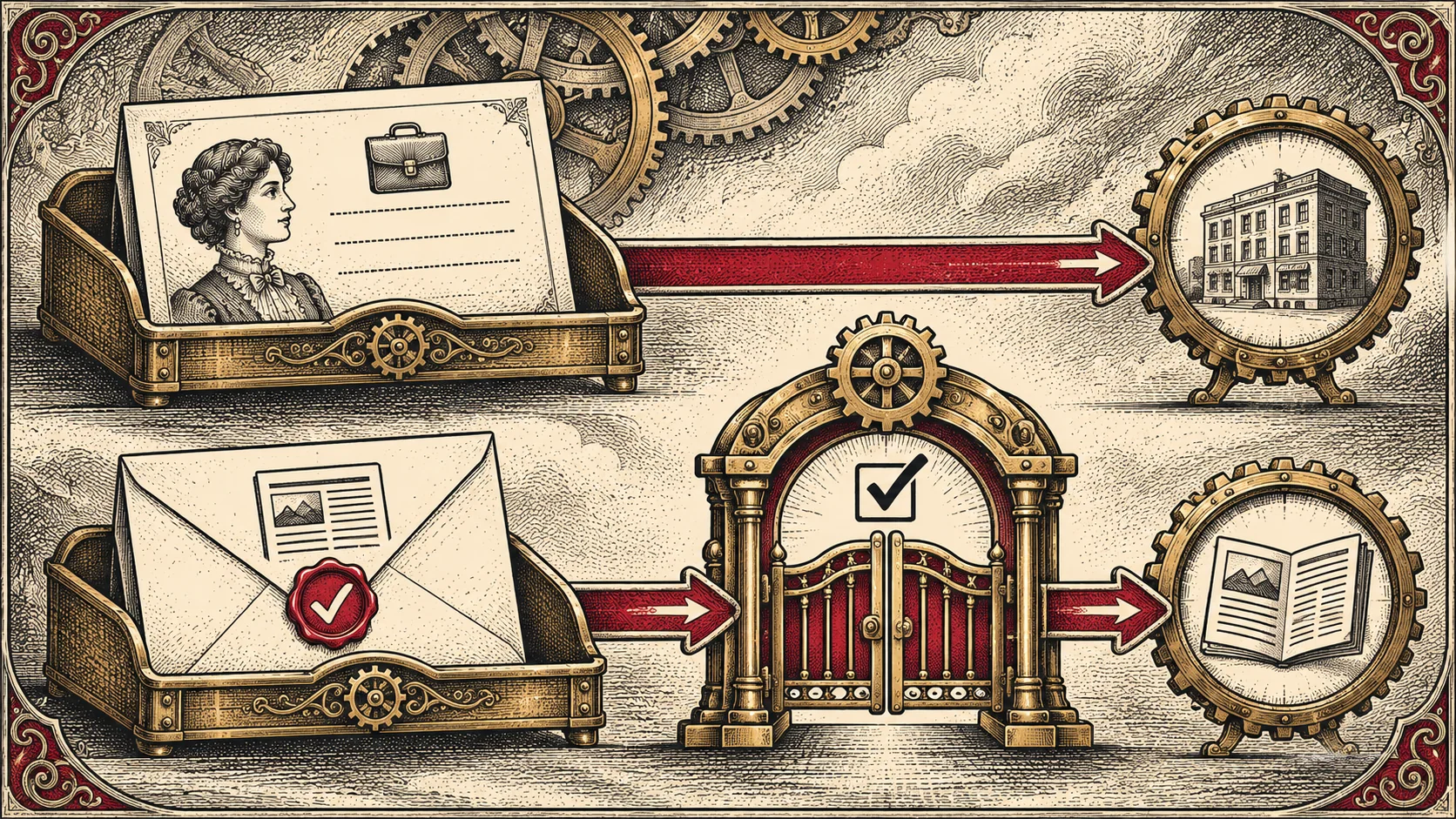
A contact enquiry and a newsletter subscription should be separate choices in your form workflow. Send the enquiry to the people handling the request; send the email address to a newsletter audience only when the visitor makes the relevant subscription choice.
Model two events, not one vague conversion
A visitor asking for a quote has given you a business request to handle. That is different from choosing recurring AI tips or promotional updates. Your integration should preserve what actually happened instead of treating every successful form submission as a newsletter signup.
In a hypothetical setup, an enquiry creates a CRM record and an internal follow-up task. A separate subscription action records the visitor’s affirmative choice and passes the address to the intended newsletter segment. Neither event should be inferred from the other.
This article describes workflow design, not a universal legal rule. Decide the notices and permissions appropriate to your business, audience and applicable requirements with qualified advice where needed.
Map each choice to its intended destination
HubSpot’s form consent guidance describes mapping consent options to the relevant marketing email subscription type. Its subscription-type documentation explains that subscription types represent categories of email communication.
The operational lesson is specific: a generic field named “consent” is hard to interpret when several kinds of communication exist. Record the particular newsletter or subscription type, the wording shown and the choice made. Avoid using a service-interest dropdown as a substitute for a marketing preference.
For integrations involving a separate email platform, confirm what its status means. An address can exist as a contact without being an active subscriber to the desired list. Do not show a definitive subscription confirmation just because the CRM accepted the enquiry.
Keep a small, useful integration record
For the enquiry event, retain the submitted contact details, service interest, message, source page, event identifier and received time. For the subscription event, retain only the information needed to process and explain that specific subscription, including its destination and the stated choice.
Limit access to those records and set retention according to your actual needs. Do not put private form payloads into public debugging pages or analytics labels. Your team needs enough information to investigate a failure without distributing customer messages across unnecessary tools.
Handle partial success honestly
Suppose the CRM saves a request but the newsletter service is unavailable. Tell the visitor the enquiry was received and that the subscription could not yet be confirmed. A newsletter retry should not send a second sales enquiry.
The reverse matters too. If the enquiry fails, a newsletter confirmation must not imply that a staff member received the business request. Keep separate status messages and recovery paths.
Before launch, test:
- Enquiry submitted with no newsletter choice: the enquiry arrives, no newsletter action runs.
- Newsletter accepted: the correct destination records the subscription outcome.
- Visitor declines: no subscription is inferred later from the CRM contact.
- Email provider fails: the enquiry remains intact and the visitor can retry the subscription.
- An existing subscriber returns: the flow preserves existing contact details and respects the provider’s status rules.
- A visitor previously unsubscribed: the supported resubscription process applies, rather than silently overriding that preference.
Questions to answer before connecting tools
Should we add a newsletter offer after the enquiry?
That can keep the main request simple. Make the offer optional, explain what the newsletter contains and keep the enquiry confirmation visible.
Is a contact record proof of subscription?
No. Check the relevant subscription state in the email destination and report only what the integration confirmed.
Where does AI help here?
AI may help classify a request or draft a response for review. Routing a known choice to a known destination usually needs clear rules rather than AI judgment. Explore GGTAMOL’s solutions or use the opportunity assessment to identify a process worth improving.