
A returned item is not automatically ready for the next booking
For a Kemah-area rental business, separate “received back” from “checked and ready.” Record the returned item, its condition evidence and the next responsible person before offering it to another customer.
Kemah’s city visitor information describes a destination with shopping, dining and visitor activities. That is useful context for businesses serving customers around the waterfront; it does not establish rental demand or results for any individual operator. See the City of Kemah visitor information.
This guide uses a fictional small equipment-rental operation. It is not a description of an actual Kemah business or a safety inspection standard.
Give each item its own return record
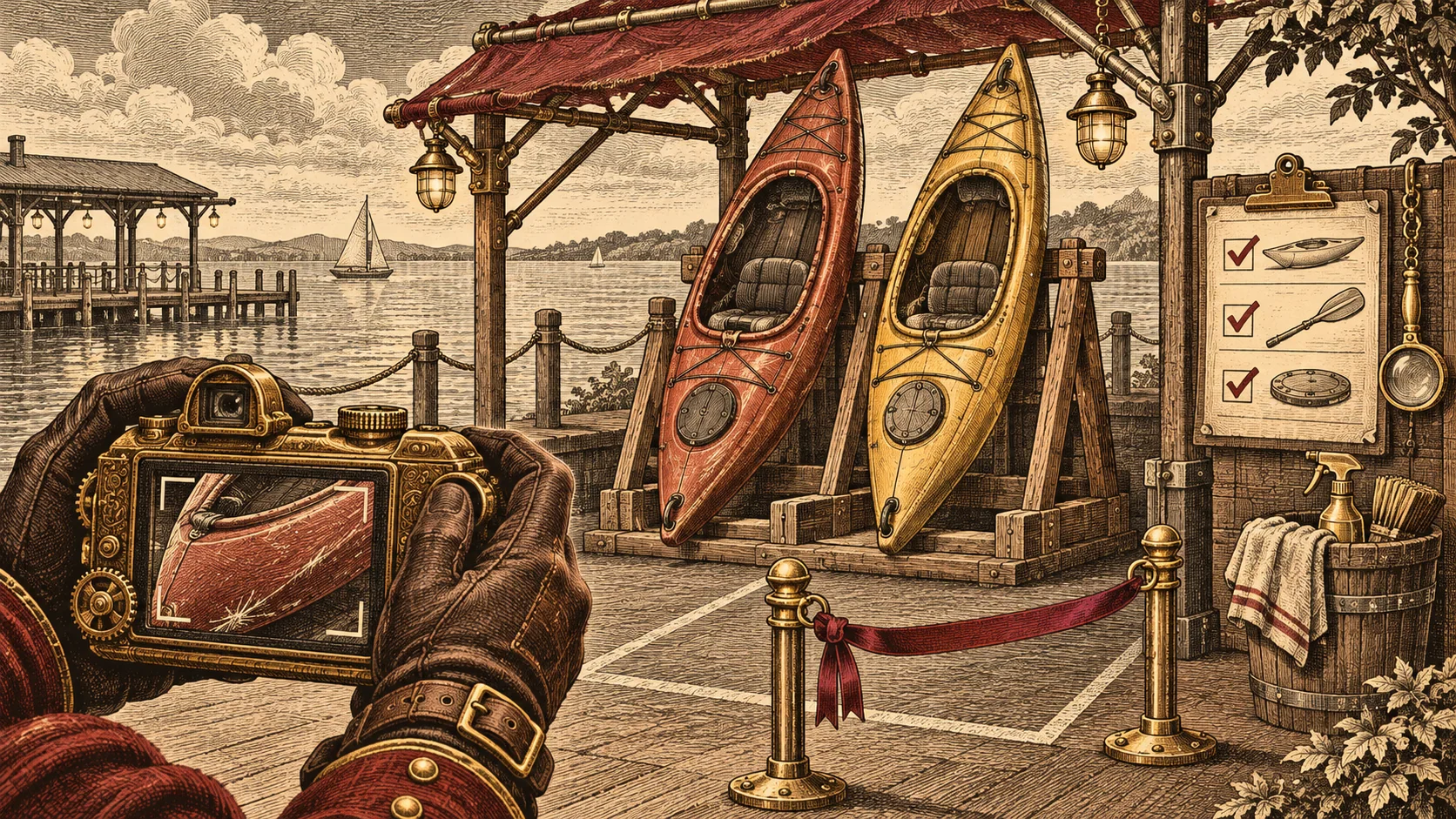
Hypothetical example: two kayaks return from the same booking. One has all expected accessories and is ready for inspection. The other is missing a paddle. A single “booking returned” checkbox hides that difference.
Create a return record per item, tied to the original booking. Capture the asset reference, return time, staff member, accessory checklist and a brief condition note. Take relevant photos where appropriate under your business’s procedures. Avoid unnecessary images of customers or unrelated personal information.
Suggested states might be:
- Received, awaiting check.
- Cleaning or preparation needed.
- Issue awaiting responsible-person review.
- Checked and ready.
- Removed from availability.
These are proposed workflow labels. Your operator must define inspection, maintenance and release procedures appropriate to the equipment.
Make the availability rule explicit
The booking system should use the approved ready state, not just the return timestamp. Otherwise, an item can appear available while it is being cleaned, reviewed or repaired.
The responsible person should be able to see which item is held, why it is held and what must happen before release. If a reviewer changes the state, keep a traceable record of that change.
This is primarily a structured automation problem. You do not need AI to compare an asset reference, require a checklist or keep an item out of the available pool. AI may help summarize a staff note for review, but it should not declare equipment safe from a photograph or impose a damage charge.
Use a mobile form that fits the return bay
A staff member handling wet equipment should not have to write an essay. Use a small number of clear choices, then reveal the note or photo field when an issue needs explanation.
Google’s AppSheet documentation describes image capture in forms, with behavior depending on the device and environment. It provides one possible tool pattern, not a complete rental-management system. See AppSheet image capture guidance.
Test the actual devices, network and storage setup before relying on uploads. A form appearing complete on screen is not enough; verify that the record and its image reach the intended destination and that authorized staff can open them.
Keep disputes and customer messages under review
A missing accessory or condition note should create a review task. It should not automatically become a customer accusation or charge. Match the return evidence with the original handover record and the applicable agreement through the responsible person’s normal process.
An initial customer acknowledgement can simply confirm receipt for inspection. Send any further explanation only after the relevant details have been checked. Do not promise a refund or a response deadline that your team has not agreed to meet.
Try five realistic cases before using it live
- A complete return with no issue recorded.
- A booking containing two items with different outcomes.
- A missing accessory that needs review.
- A photo upload that fails or arrives late.
- A held item that somebody attempts to book again.
For each case, verify the item state, availability and assigned task. The goal is a dependable handoff from return bay to the next rental, not a larger form.
Questions for Kemah-area operators
Can AI decide whether the equipment is ready?
Keep release with a qualified responsible person and your defined procedures. A model-generated note is not an inspection or safety approval.
Should a return immediately trigger a damage charge?
No automatic assumption is appropriate here. Use the agreement, evidence and responsible-person review before deciding any customer action.
What is the best place to start?
Choose one equipment category and map its return-to-ready steps. Use a short test with invented bookings, then review it with the staff who handle returns. Contact GGTAMOL to discuss connecting intake, tasks and availability; GGTAMOL is Houston-based and serves the area without claiming a Kemah office.